
Solid Colors in the British Shorthair: Genetics and Variations
Solid Colors in the British Shorthair: Genetics and Variations
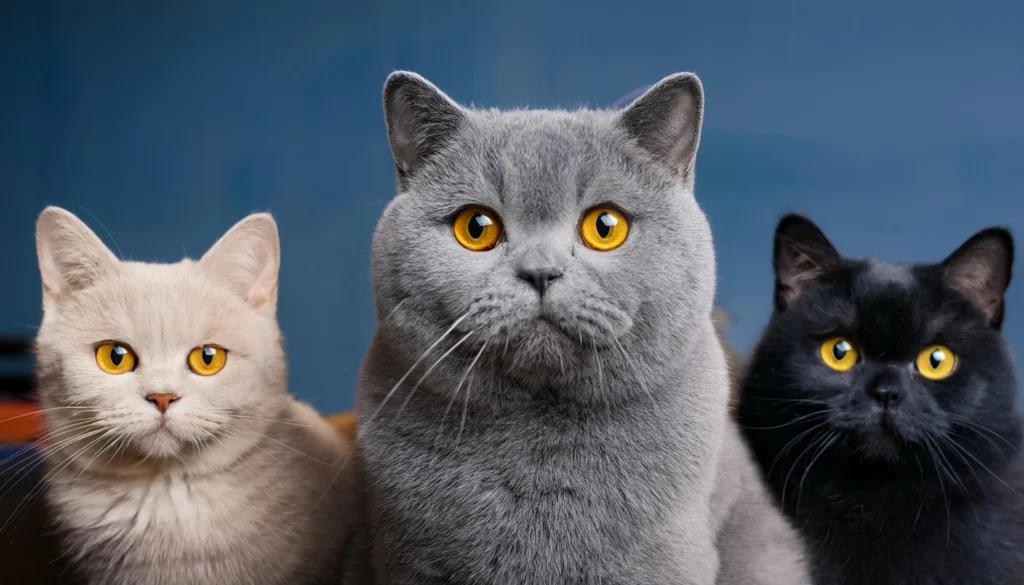
British Shorthair cats are recognized worldwide for their robust build and dense coat, but it is in the uniformity of their solid colors that the breed reaches the peak of elegance. Here at British Village, we consider the solid coat a true challenge for the breeder because it requires genetic perfection where every single hair, from root to tip, must present the same tone without patches or variations.
In this complete guide, I will explain how genetics work to create these fascinating colors and which details make each variation unique within the breed standard.
⸻
What Defines a Solid Color?
For a British Shorthair to be considered solid (or "Self"), it must present a uniform tone throughout its entire body. This means there should be no shading, stripes (tabby markings), or mixed hairs of different colors.
The coat texture in this breed, which we often compare to a velvet carpet, helps highlight the depth of the color. However, achieving this perfect uniformity is complex, especially in colors like red and cream, where "ghost" stripes often insist on appearing.
⸻
The Genetics Behind the Colors
The color we see in our cats is the result of a refined chemical and genetic interaction. Basically, it all starts with two main pigments: Eumelanin (black and its derivatives) and Pheomelanin (red and its derivatives).
The secret to a cat being solid lies in the Non-Agouti Gene (a). In wild cats, every hair has bands of colors (the agouti pattern). The recessive "a" gene blocks this distribution of pigment, causing the color to be deposited continuously along the entire length of the hair.
The Role of Dilution
Another fundamental point is the Dilution Gene (D). It determines the density of the pigment granules in the hair. When a cat has the dominant gene (D), the color is intense. When it has the recessive gene (d), the granules clump together differently, "diluting" the color visually.
| Intense Color | Diluted Color (Soft Version) |
|---|---|
| Black | Blue (Classic Grey) |
| Chocolate | Lilac (Pinkish Grey) |
| Cinnamon | Fawn (Pinkish Beige) |
| Red | Cream |
⸻
Solid Colors in Detail
Here at the cattery, we observe that each color brings a distinct visual personality. Below, I detail the most emblematic variations:
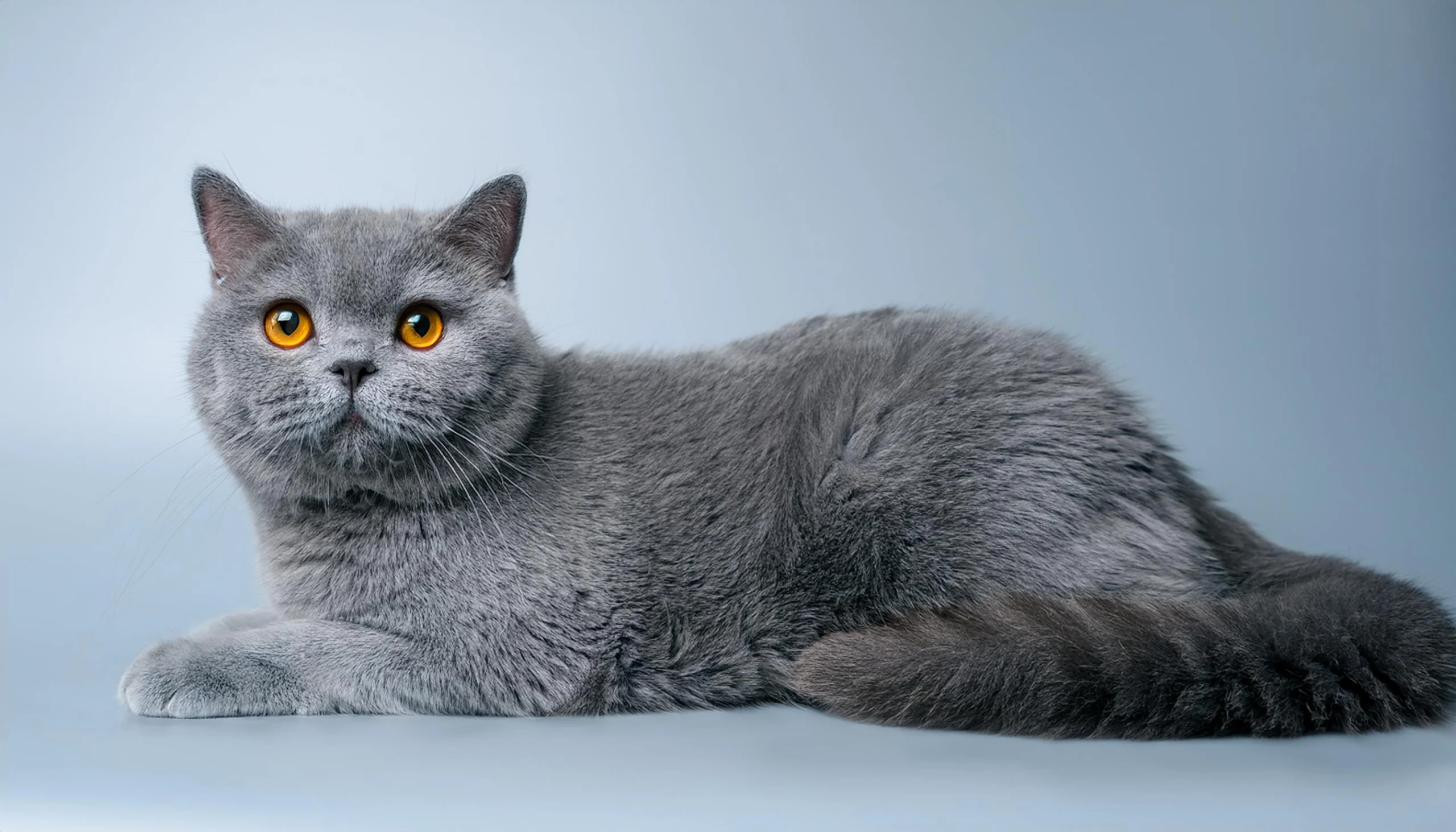
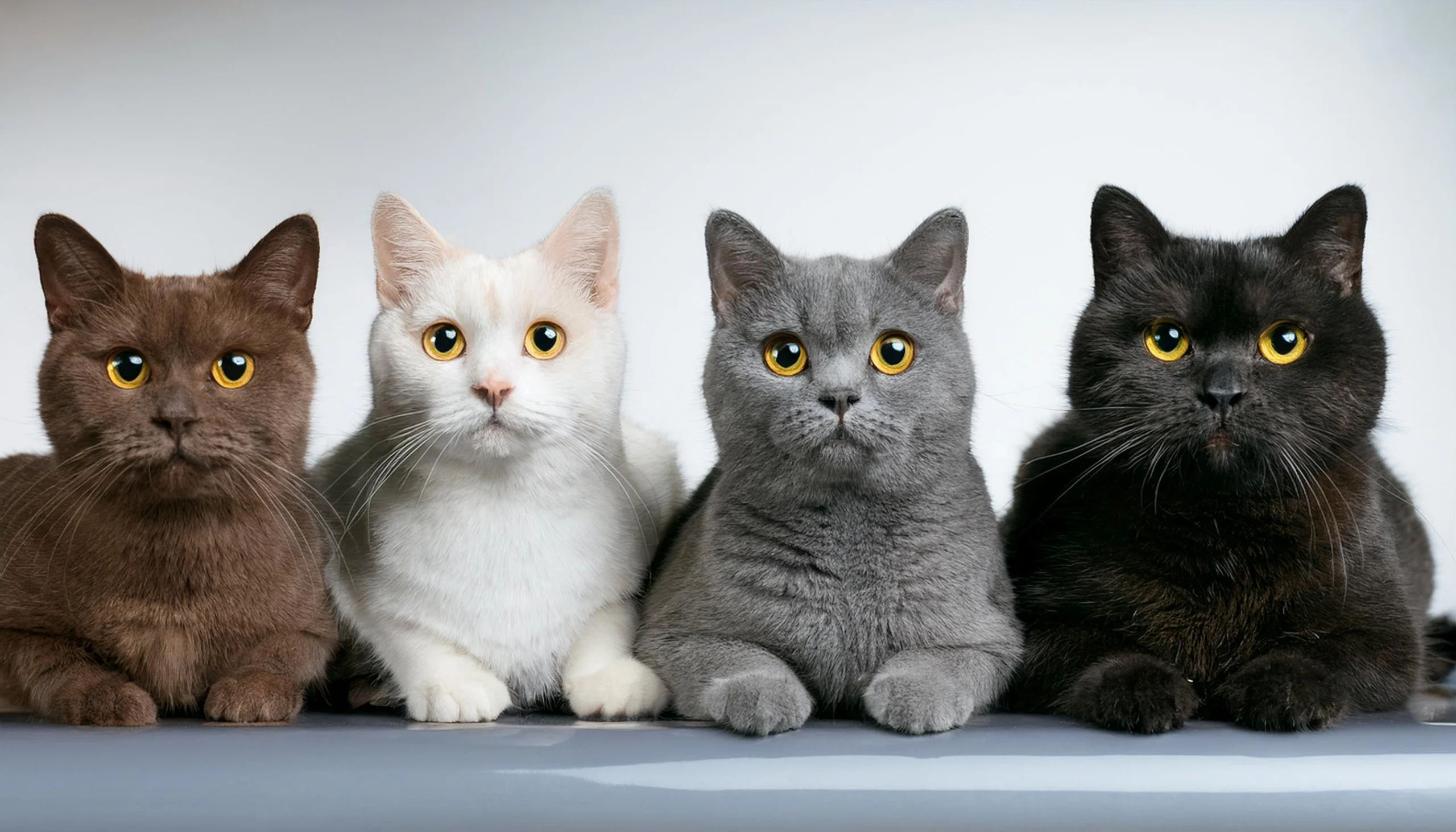
Blue This is the breed's trademark. The blue should be a medium to dark grey, uniform, and with a subtle silvery sheen. It is, without a doubt, the color that best exemplifies the density of the British Shorthair coat.
Black A high-lineage black British Shorthair is a majestic sight. The black must be deep, coal-colored, without any white hairs or rusty tones. Maintaining this color impeccable requires care, as sunlight and even saliva can oxidize the pigment.
Chocolate and Lilac Chocolate is a rich, warm brown, reminiscent of dark chocolate. Lilac, on the other hand, is one of the most sophisticated colors. It is neither grey nor pink but an ethereal mixture of both, similar to the color of a dove.
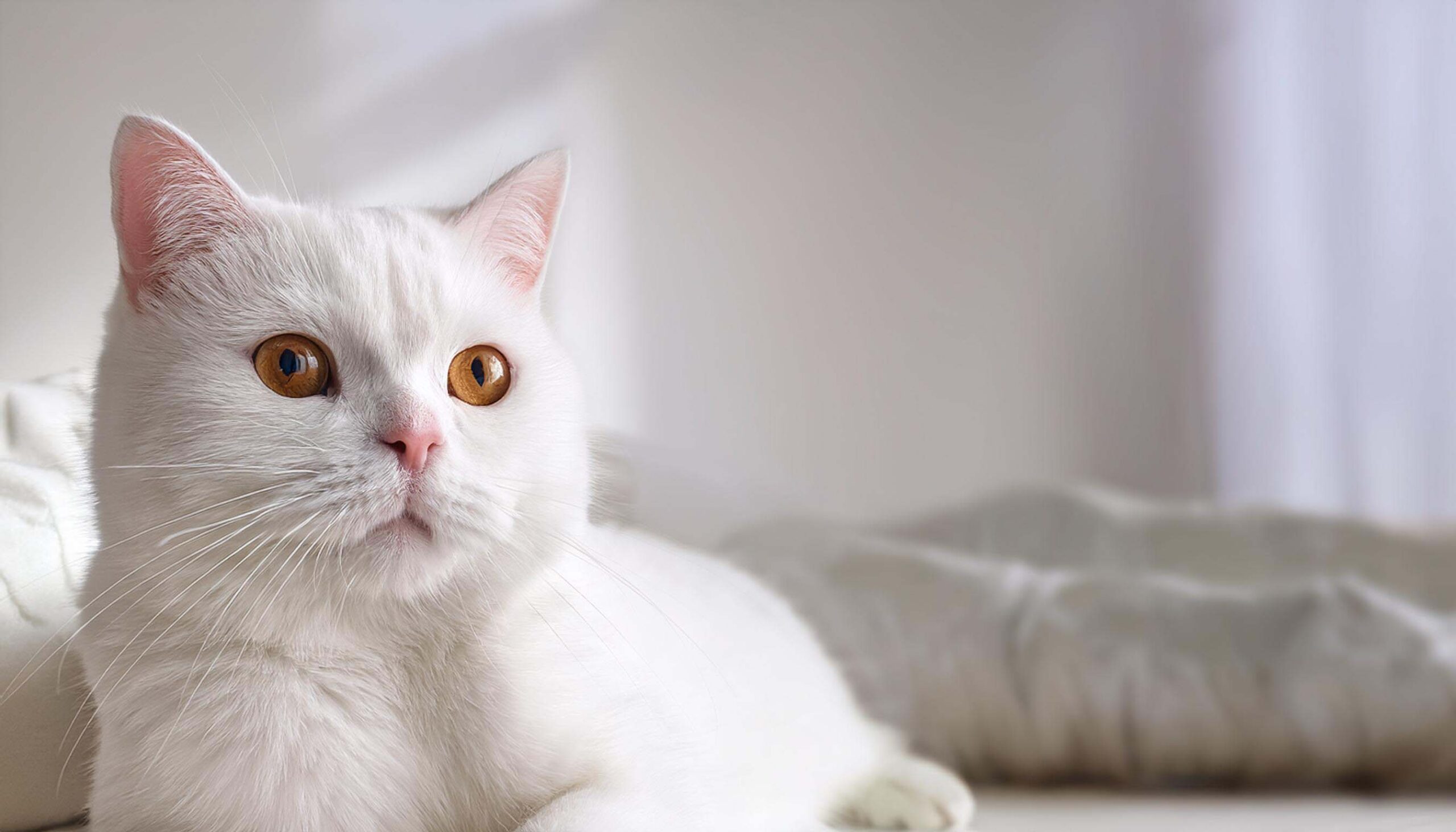
White Solid white is the total absence of pigment. It is a noble color that is usually accompanied by intense copper, blue, or even one of each (Odd-eyed).
⸻
Ghost Markings and Color Changes
An interesting fact we always explain to new owners is that many solid-colored kittens are born with what we call ghost markings. These are very faint stripes that can be seen under certain lights.
This happens because, genetically, every cat is a "tabby" underneath the solid color. As the kitten grows and the coat becomes denser and more mature, these markings tend to disappear completely, giving way to the definitive solid color around 12 to 18 months of age.
⸻
FAQ – Frequently Asked Questions
Does the color of the British Shorthair change with the sun? Yes. Dark colors, such as black and chocolate, can undergo a "rusting" process (oxidation), turning reddish if the cat spends too much time exposed to direct sunlight.
What eye color is allowed for solid cats? In the vast majority of solid colors, the standard of excellence requires eyes in deep copper, orange, or intense gold tones. The main exception is white, which can have blue or odd eyes.
Are black cats harder to breed? In terms of color standards, yes. Any small white patch or shadow can disqualify the cat in an exhibition. It is a color that requires very clean genetics.
⸻
About British Village
This content was produced based on our daily experience as specialized British Shorthair breeders. We are British Village, a cattery dedicated to genetic excellence and the deep study of the breed. Our passion is to ensure that every kitten, whether blue, black, lilac, or any other color, represents the highest standard of health and beauty.