
Taking Your British Shorthair on a Trip: Is It a Good Idea?

Taking Your British Shorthair on a Trip: Is It a Good Idea?
Taking a British Shorthair on a trip can seem like an immense challenge, but with proper planning and an understanding of the breed's temperament, it is possible to transform this experience into something safe and controlled.
Here at British Village, we know that felines are territorial animals and very attached to their home routine. In the case of the British Shorthair, this characteristic is even more evident. They are cats that appreciate predictability and the silence of home. Sudden changes in environment can cause stress and behavioral changes. Before deciding, it is necessary to evaluate whether the trip will bring more benefits or discomfort to your companion.
⸻
Do Cats Like to Travel?
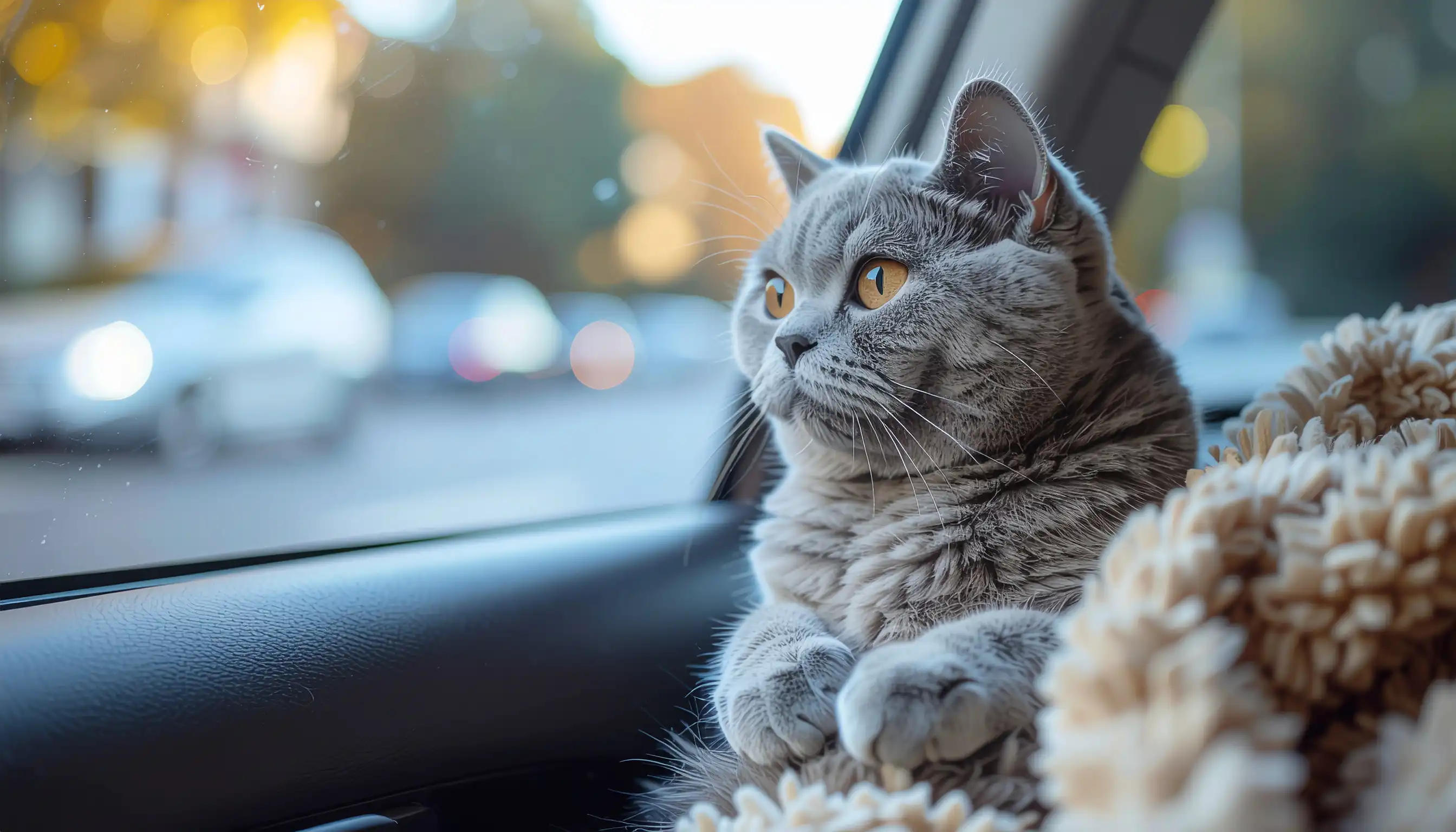
In general, cats prefer their own territory. The British Shorthair, specifically, is not known for being an adventure cat or a born explorer like other more active breeds. They are observers and feel safe where they know every corner.
This does not mean that a trip is impossible. However, the owner must understand that a cat does not enjoy the outing in the same way a dog does. For a British Shorthair, traveling is a process of constant adaptation. Our mission as breeders is to provide the correct information and strategies to minimize this emotional impact.
⸻
How to Prepare Your British Shorthair for the Road
Preparation should begin weeks before the day of departure. The secret to a successful trip with a British Shorthair lies in desensitization.
Our preparation recommendations:
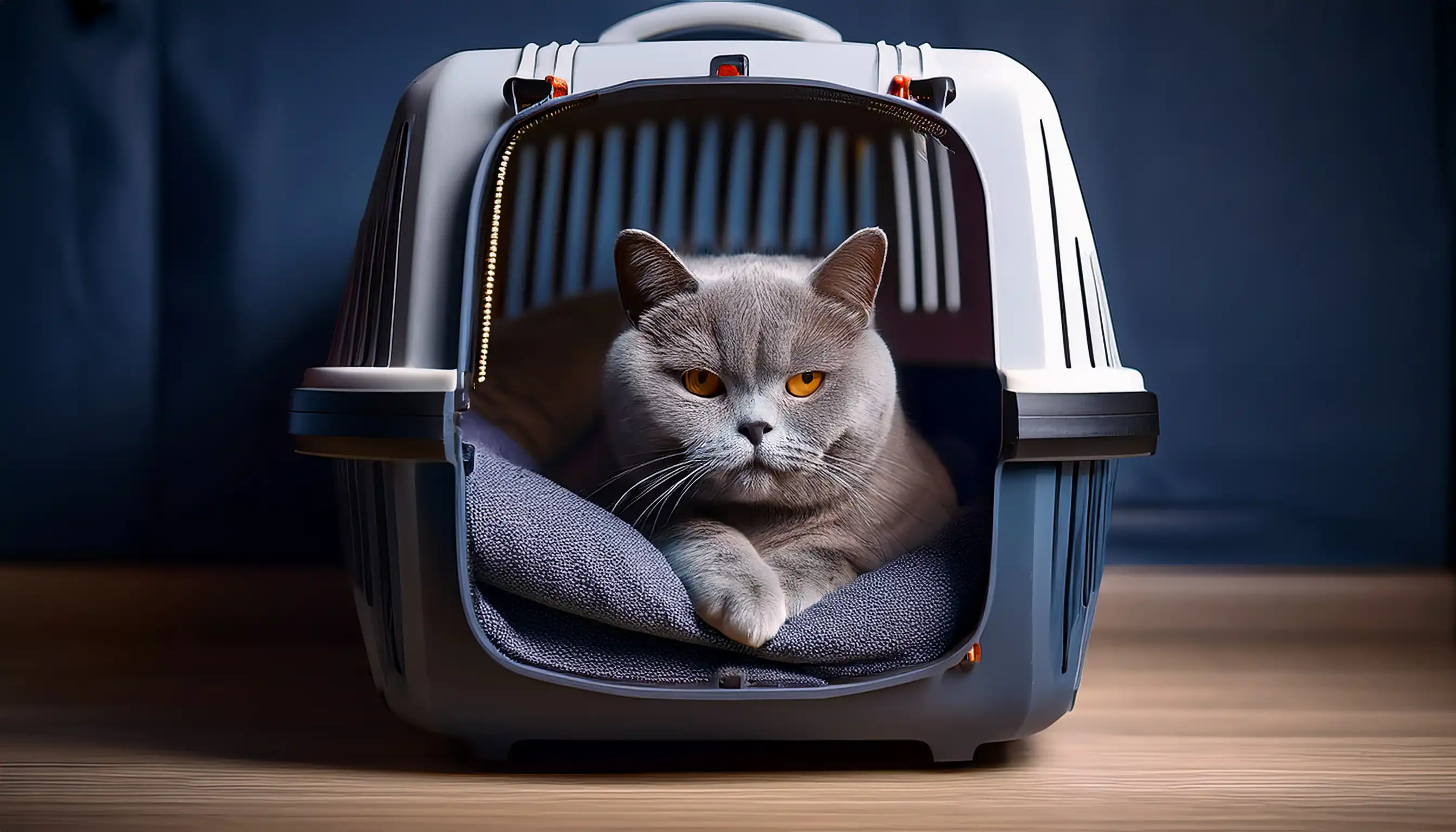
- Proper transport carrier: Since the British Shorthair is a robust and heavy cat, the carrier must be rigid, resistant, and large enough for the cat to turn around inside. Leave the carrier open in the living room days before, with treats and blankets inside, so the cat sees it as a refuge, not a trap.
- Familiar scent items: Smell is the sense that brings the most security to a cat. Take their used bed, favorite toys, and even a piece of your clothing. This helps create a bubble of security within a strange environment.
- Use of pheromones: Synthetic pheromone sprays can be applied to the carrier and the car 15 minutes before the trip to help calm their nerves.
- Veterinary consultation: Check that vaccinations are up to date. Ask your veterinarian about natural supplements that help control stress during long journeys.
⸻
During the Journey: Car or Plane
The comfort of your British Shorthair must be the absolute priority. Remember that the British has a very dense coat and tends to feel heat easily when stressed.
If traveling by car:
- Keep the transport carrier secured with the seat belt in the back seat at all times.
- The air conditioning should be at a pleasant temperature, as excessive heat is a dangerous trigger for feline anxiety.
- Take breaks, but avoid taking the cat out of the carrier in open places. Offer fresh water, but do not be surprised if they refuse food during the journey.
If traveling by plane:
- Check in advance the airline's rules for transport in the cabin.
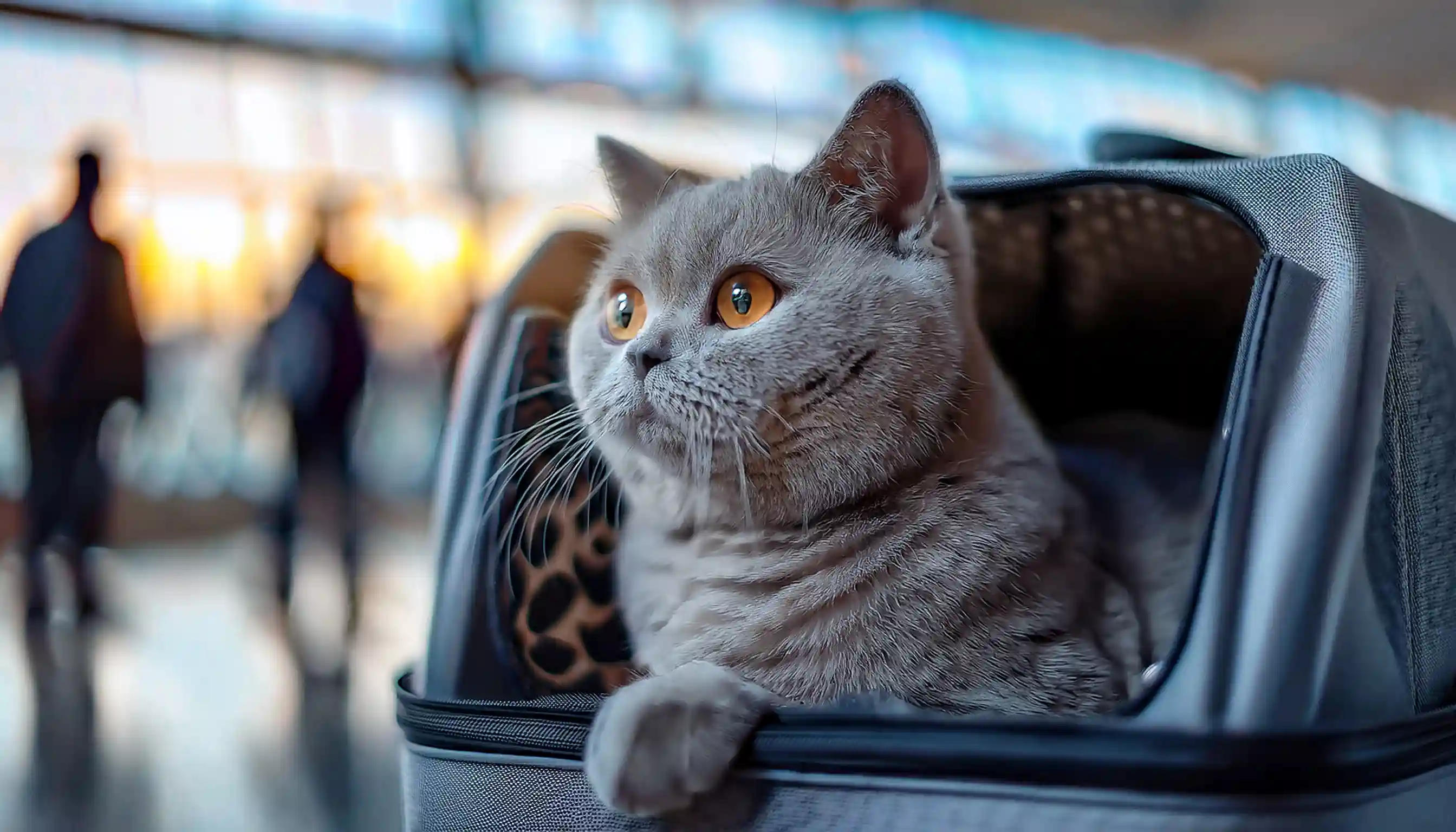
- Transport in the cargo hold is also a common and safe option, widely used for shipping cats between states. It is essential to ensure that the company uses climate-controlled compartments and follows all animal welfare protocols.
- Have all original documentation on hand and avoid feeding the cat a few hours before the flight to prevent motion sickness.
⸻
Arriving at the Destination: The Adaptation Period
When arriving at the destination, do not release the cat immediately. The ideal is to reserve a small room as an operational base. Place the litter box, water, and food in this safe space.
Allow your British Shorthair to explore the new place gradually. As they are calm cats, it is likely they will choose a hiding spot for the first few hours. Respect this time and do not force interaction. When they feel secure, they will come out on their own to investigate the environment.
⸻
Conclusion
Traveling with a British Shorthair is a decision that must be made with love and responsibility. By ensuring their well-being at every stage, you significantly reduce the risks of trauma caused by stress. With planning, your companion can be by your side in a calm and safe manner.
⸻
About British Village
This content was prepared based on our practical experience as specialized British Shorthair breeders. We are British Village, a cattery dedicated to excellence and the absolute well-being of every kitten. We use our daily experience to guide owners on how to provide the best quality of life for their cats, always respecting the particularities of this very special breed.