
Article · British Village
Safe plants for cats: a British Shorthair indoor guide
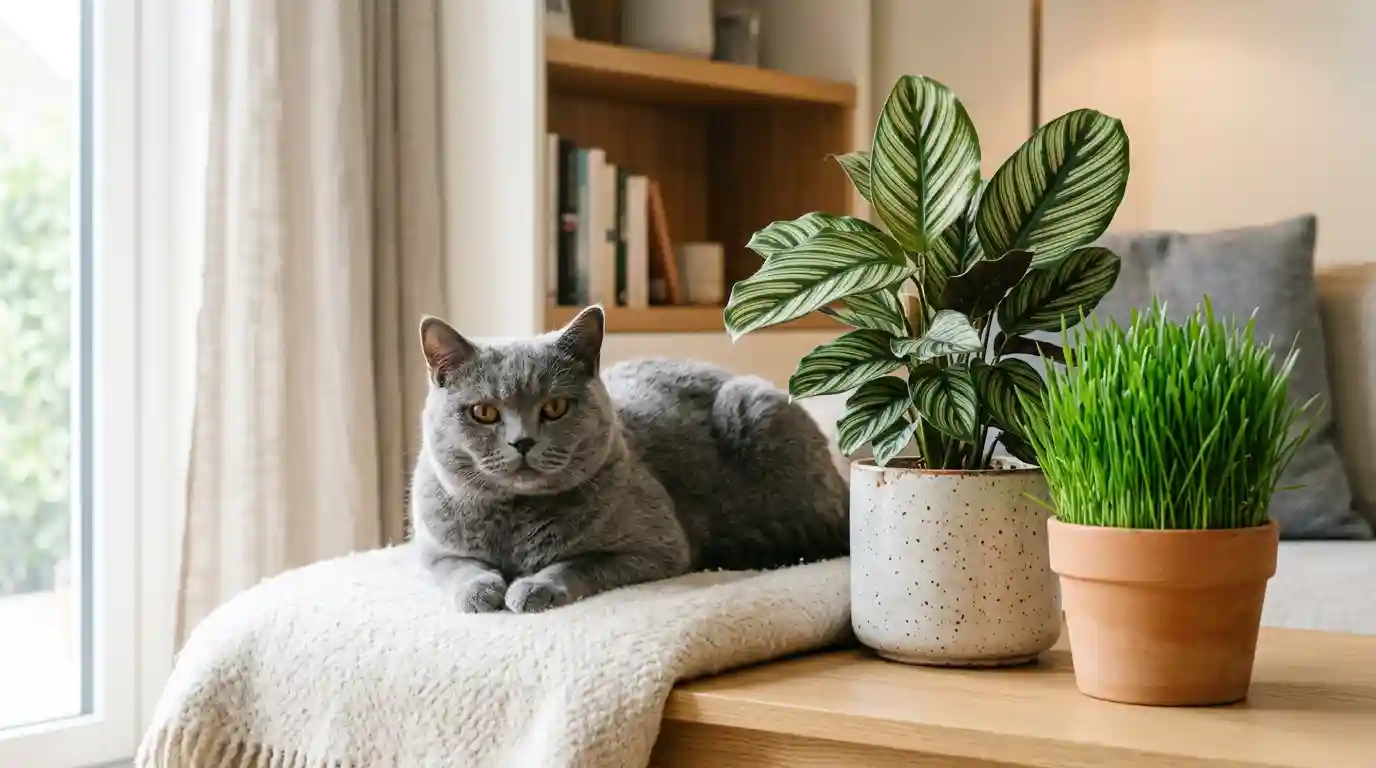
Safe Plants for British Shorthair Cats: A Practical Guide for Owners
Houseplants bring freshness, visual comfort, and a welcoming feel to any home. But when you live with a British Shorthair, choosing species goes beyond aesthetics: feline safety and feline environmental enrichment must come first.
In this article, we share how we organize our environments with safe plants for cats, respecting the calm and observant profile of this breed. If you want to enrich your indoor routine without taking unnecessary risks, see our recommendations.
⸻
What Makes a Plant Safe for Cats?
A plant is considered safe when it does not contain toxic substances that can cause poisoning through contact, licking, or ingestion. Even non-lethal species can cause digestive discomfort if a cat chews them excessively.
In practice, we evaluate three points before keeping any pot indoors:
- Toxicity — the plant should not appear on lists of species dangerous to felines.
- Accessibility — overly exposed pots invite exploration; the ideal is to balance stimulation and protection.
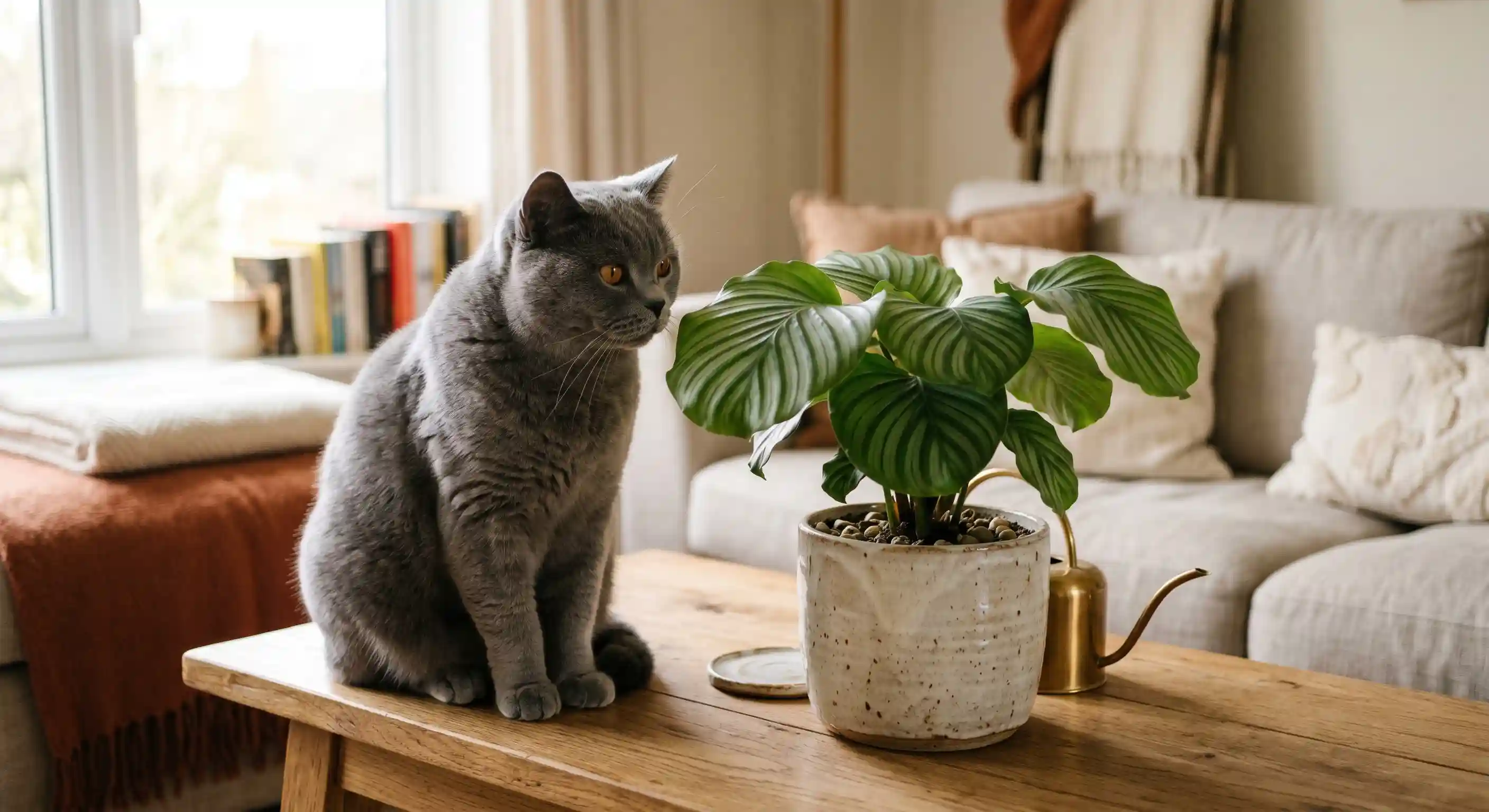
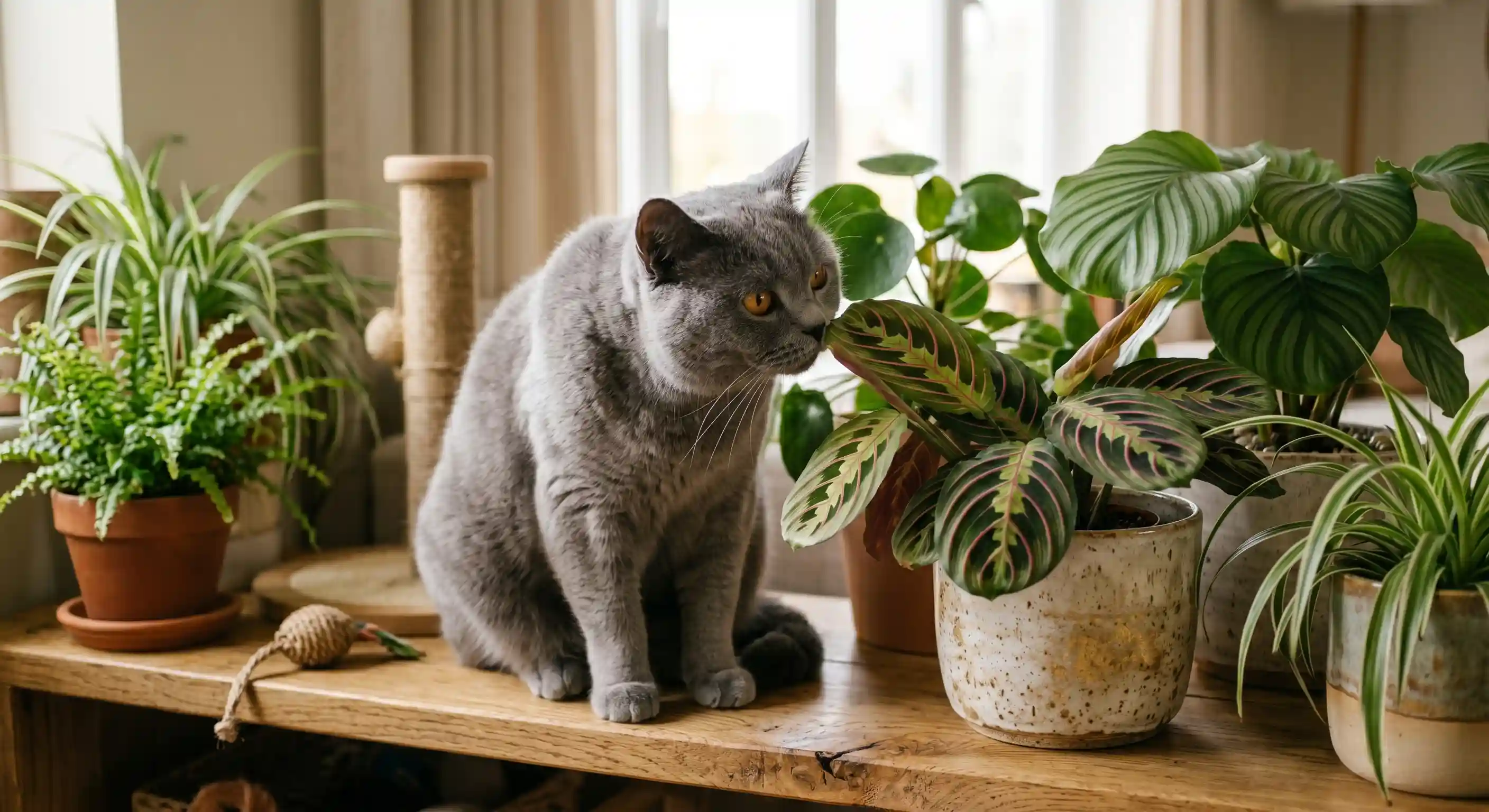
- Cat behavior — each British has its own pace; some only sniff, others like to nibble leaves.
When in doubt, consult your veterinarian before introducing a new species. Safety always comes before decoration.
⸻
Benefits of Plants in Homes with British Shorthair
The British Shorthair is naturally home-oriented and enjoys calm environments. Well-chosen plants contribute to indoor quality of life in concrete ways:
Sensory Enrichment Leaves, textures, and gentle scents arouse curiosity without overwhelming a cat with a balanced temperament.
Stress Reduction Green environments help create more pleasant routines, especially in apartments where outdoor access is limited.
Behavioral Redirection By offering safe species — such as cat grass or catnip — you reduce the chance of your cat seeking inappropriate ornamental plants.
Air Quality and Visual Comfort A greener home tends to be more pleasant for owners and cats alike, reinforcing the safe refuge feeling this breed values.
⸻
Recommended Safe Plants
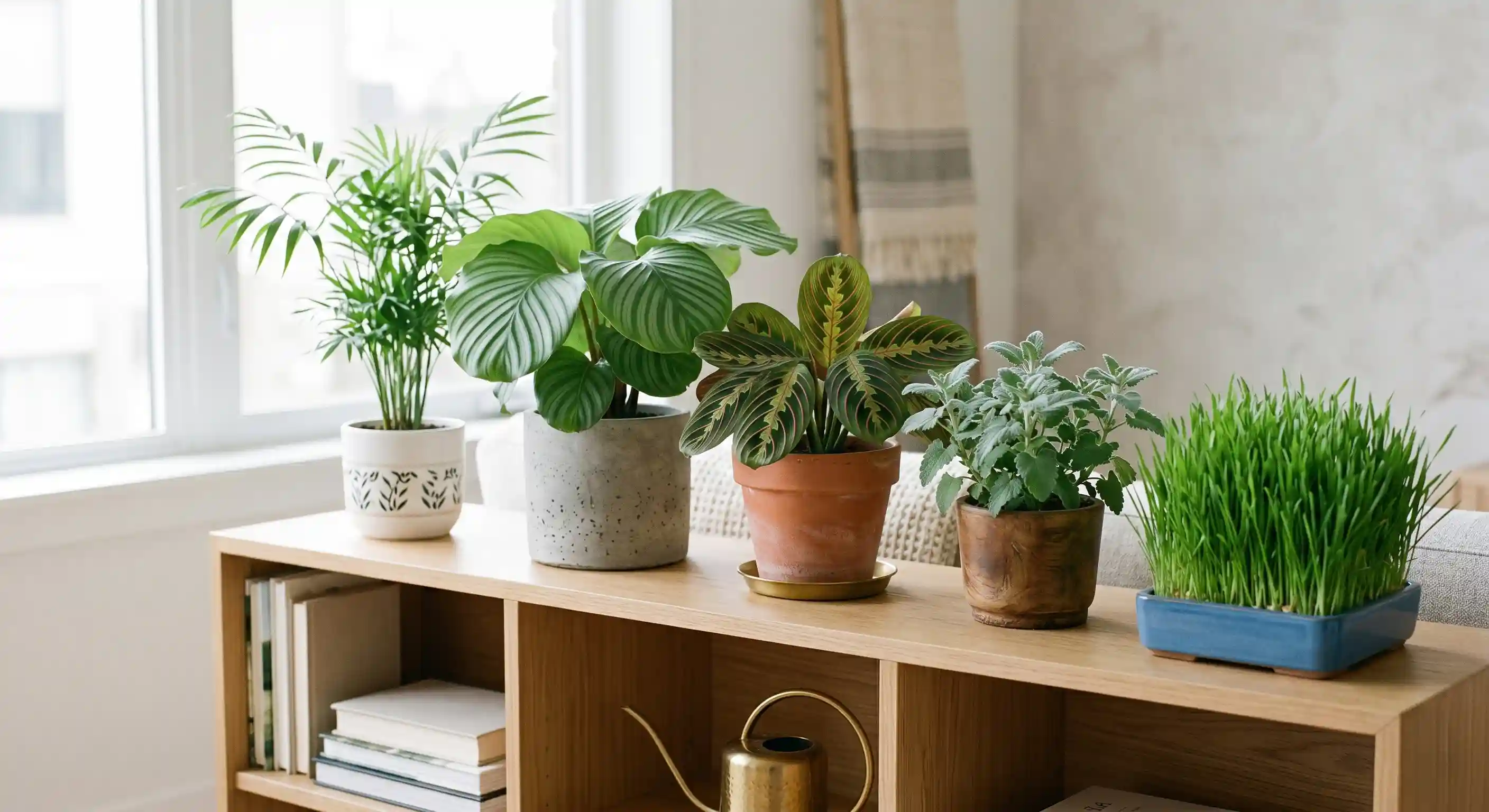
These are species that usually work well in homes with British Shorthair cats. All are non toxic plants for cats, as long as they are offered with common sense:
- Areca palm (Dypsis lutescens) — elegant palm with light leaves, ideal for spacious living rooms.
- Calathea — striking texture and lush appearance; cats usually only explore.
- Maranta (prayer plant) — delicate foliage that moves throughout the day, encouraging observation.
- Bamboo palm (Chamaedorea) — compact and hardy, a good option for indoor corners.
- Orchid (Phalaenopsis) — elegant, non-toxic flower; ideal for decorating elevated shelves.
- Catnip — safe and stimulating; encourage use in dedicated pots.
- Cat grass — excellent for controlled chewing and natural dietary enrichment.
Our tip is to keep catnip and grass pots accessible, and place ornamental plants on elevated shelves or stable stands.
⸻
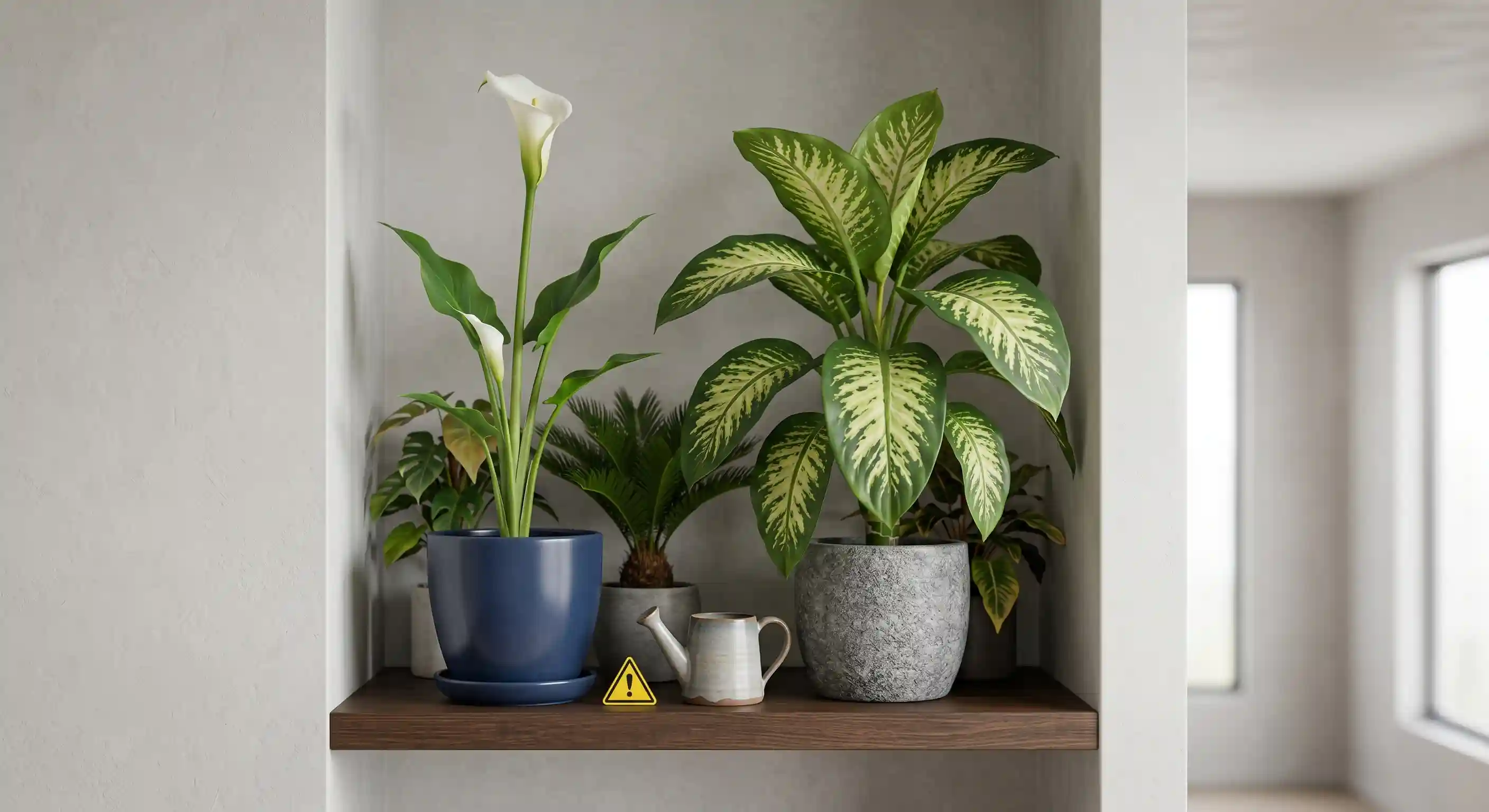
Plants to Avoid
Some very common decorative species are dangerous for felines. Even the British, with its more reserved temperament, may show interest in leaves or flowers at certain times.
Pay special attention to:
- Lily (Lilium) — highly toxic; can cause acute kidney failure.
- Dieffenbachia (dumb cane) — causes oral irritation and digestive discomfort.
- Snake plant (Sansevieria) — popular, but unsuitable for homes with cats.
- Pothos (Epipremnum) — beautiful, but not safe for feline environments.
If you already have any of these plants, the wisest approach is to relocate them to a room without cat access or replace them with safe alternatives.
⸻
How to Create a Safe Environment
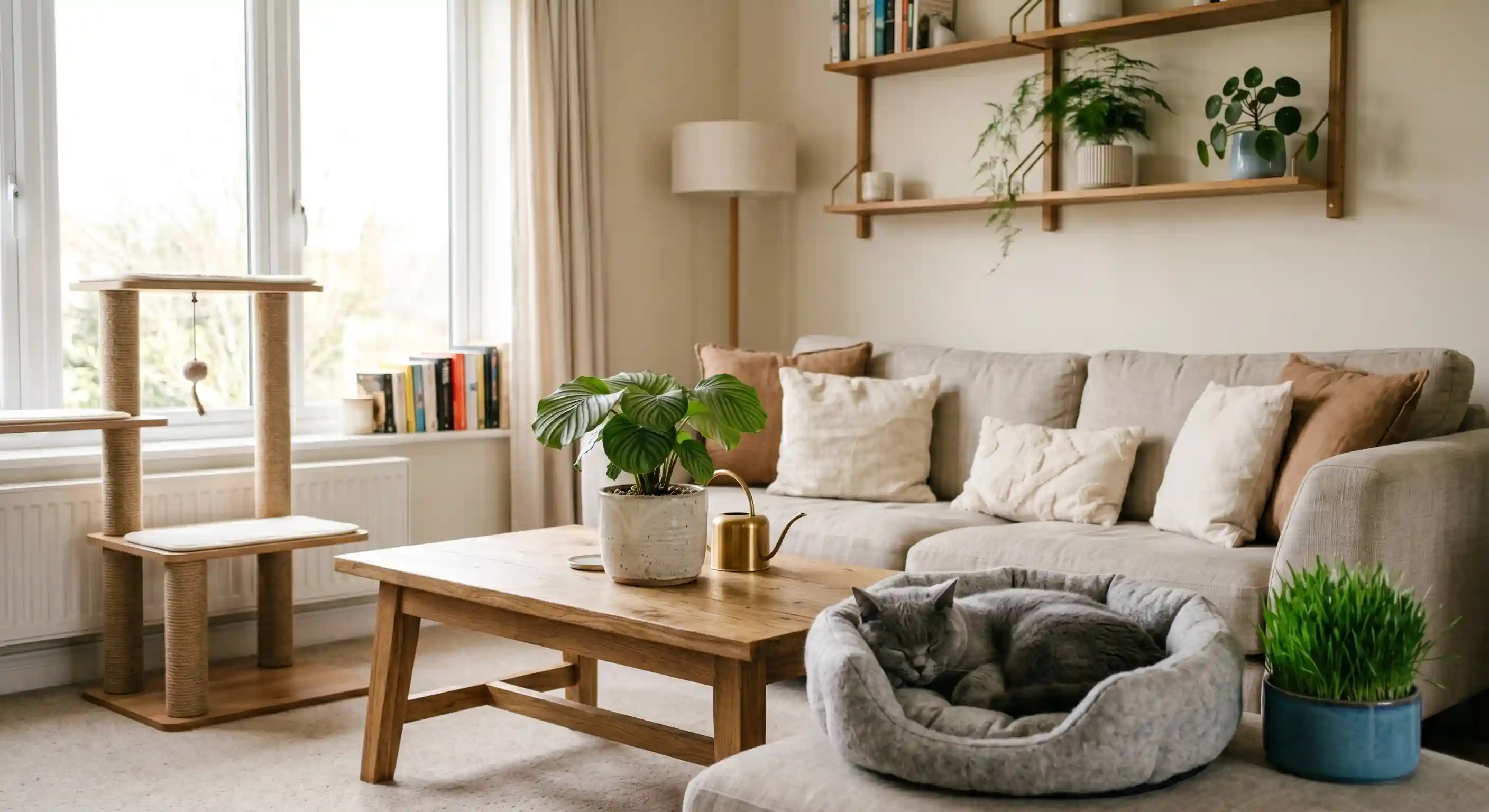
Setting up a green home for your British Shorthair requires simple, consistent organization:
- Map your pots — identify what is safe and what needs to be moved away.
- Use shelves and stands — elevate ornamental plants and keep catnip and grass within reach.
- Avoid pesticides — prefer natural care or products suitable for homes with animals.
- Observe the routine — changes in interest in leaves may indicate boredom or a need for stimulation.
- Combine with other enrichment — scratchers, elevated beds, and toys complete the environment.
At British Village, we see that a well-planned space reduces accidents and makes the owner's daily life much more peaceful.
⸻
Conclusion
Choosing safe plants for British Shorthair cats is a practical way to care for your cat's well-being without giving up a beautiful, welcoming home. With suitable species, smart placement, and routine observation, you turn your house into a richer and safer environment.
Start gradually, test your cat's reaction, and adjust as needed. A well-chosen pot can make all the difference in indoor quality of life.
⸻
About British Village
This content was prepared based on our daily experience with the breed. We are British Village, a cattery specialized in British Shorthair, dedicated to promoting health, balance, and quality of life for every kitten.
With deep respect for the breed and feline well-being, we use our experience to guide owners through all stages of their cats' lives.